AI Managed Services That Keep Work Moving
AI managed services keep deployed workflows monitored, maintained, and accountable after implementation. Define the systems covered, who reviews exceptions, and what support costs.
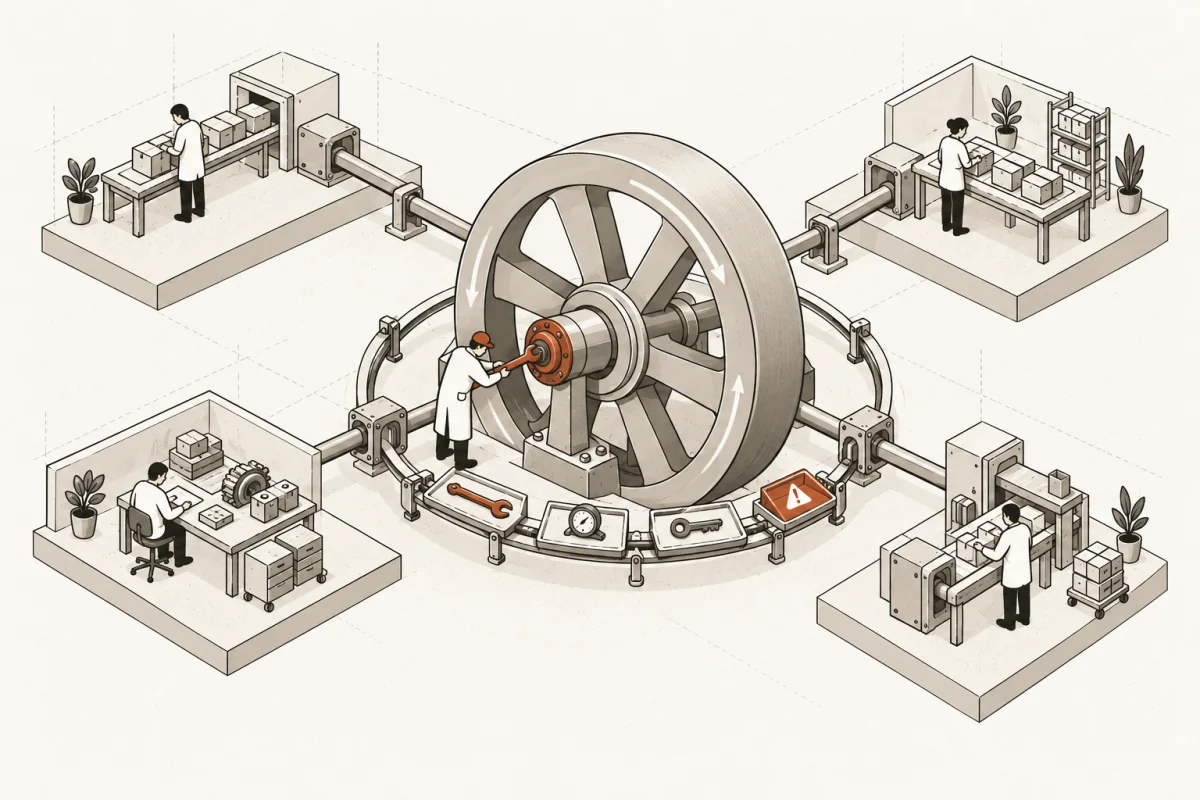
A working AI system does not stay valuable because it was impressive on launch day. It stays valuable because someone monitors the inputs, fixes broken connections, improves weak outputs, and makes sure staff still know when to step in. That is the practical case for AI managed services: ongoing operational ownership after the build is complete.
For a small or mid-size business, the issue is rarely whether a chatbot can write an email or summarize a document. The issue is whether lead details reach the CRM correctly, whether staff stop copying data between systems, whether client-sensitive information stays controlled, and whether a manager can override a bad recommendation. If those answers are unclear, the system is not ready to run unattended.
What AI managed services actually cover
AI managed services are ongoing support for the AI agents, automations, integrations, and data systems used in daily operations. They are not a vague retainer for “AI innovation.” They should define who owns what, what gets monitored, how changes are approved, and how quickly problems are addressed.
A practical managed-service arrangement usually covers three jobs. First, it keeps the system running: credential updates, integration checks, error handling, usage monitoring, and routine maintenance. Second, it improves the system based on real use: refining prompts, adjusting workflow logic, adding approved knowledge, and removing steps that create friction. Third, it provides governance: access controls, escalation paths, auditability, and human review rules for decisions that carry financial, legal, clinical, or reputational risk.
The exact scope depends on what was deployed. A lead-response agent connected to a CRM needs a different support plan than a back-office system that prepares accounting packets, routes service requests, and assembles management reports across several departments.
Why a completed build is not the finish line
Business operations change constantly. A sales team revises its intake form. An accounting platform changes permissions. A new service line requires different qualification questions. A staff member discovers that a summary is useful but too long to review between client calls.
Without ongoing ownership, small changes pile up. The automation still technically works, but it works around the business rather than inside it. Staff return to spreadsheets, inbox forwarding, and copy-and-paste because correcting the system feels harder than bypassing it. That is how an AI investment turns into another unused software subscription.
The risk is higher when multiple tools are involved. A workflow can depend on a form, a CRM, an email platform, a scheduling tool, a document repository, and an AI model. One changed field name or expired connection can stop work downstream. Your team should not have to discover that a high-value workflow failed after a prospect went unanswered or a client packet was sent late.
Managed support creates a named operating rhythm for catching those issues. It also creates a place to decide which requests are worth building. Not every employee request should become an automation. A good provider separates a useful improvement from a one-off preference that adds complexity without reducing cost or cycle time.
The service should be measured against operations, not activity
A monthly report full of model calls, prompts, and technical tickets does not prove business value. Those figures can help diagnose a system, but leadership should see operational measures first.
For lead operations, that might mean response time, qualified appointments booked, and percentage of leads with complete CRM records. For a professional-services firm, it could mean preparation hours returned, turnaround time, review revisions, and on-time client deliverables. For a construction business, it may be faster bid intake, fewer missing job details, and less office-to-field rekeying.
Start with a baseline before the system goes live. If a coordinator spends 12 hours each week preparing reports, document that work. If inbound inquiries wait until the next business day, measure the actual delay. Then assess the system against the constraint it was built to remove.
This matters because AI can create attractive outputs while failing to change the economics of the operation. A system that saves five minutes but requires fifteen minutes of review has not helped. A system that drafts a response but cannot reliably use the right customer data has moved work, not eliminated it.
Human ownership is a requirement, not a fallback
The right operating model is not “set it and forget it.” It is “automate preparation, preserve judgment.” AI can classify, draft, extract, route, compare, and flag. Your people should retain control over commitments, exceptions, approvals, and decisions that affect customers, employees, finances, or compliance.
That requires explicit controls. Staff need to know which actions an agent can take automatically, which require approval, and how to correct it when it is wrong. Managers need visibility into the source data and decision path, not just a polished answer on a screen.
For example, an AI agent can prepare a renewal outreach email from CRM history and recent account notes. It should not quietly promise pricing, terms, or service commitments outside an approved policy. An intake agent can identify missing information in a prospective client submission. It should not make legal, medical, or financial determinations.
Explainability is operationally useful, not just a compliance phrase. When a staff member can see why the system flagged a record or selected a next step, they can validate it quickly. When they cannot, trust drops and adoption follows it out the door.
What to demand from an AI managed-services provider
Do not buy an undefined bundle of support hours. Ask for the operating rules in writing. You should know the included systems, expected response times, maintenance cadence, reporting format, change-request process, and pricing for work outside the original scope.
A credible provider should also be direct about limits. Managed services can maintain and improve a well-scoped system. They cannot repair a process that no one owns, data that is consistently inaccurate, or software access your business cannot provide. They also cannot make an AI model perfectly accurate. The answer is not to pretend those constraints do not exist. The answer is to build review points and exception handling around them.
Security deserves equal specificity. Ask what data is processed, where it moves, which users can access it, how permissions are managed, and whether sensitive identifiers are restricted from external systems. The right answer varies by industry and workflow. A healthcare practice, law firm, and e-commerce operator will have different requirements, but none should accept hand-waving.
You should also retain ownership of the blueprint: the workflows, system documentation, accounts, access model, and instructions needed to operate the system. A provider can be your operating partner without becoming the gatekeeper to your own business infrastructure.
A sensible cadence after launch
Most businesses do not need a major redesign every month. They need a consistent schedule that keeps high-value workflows reliable while making room for measured improvements.
In the first 30 to 90 days, support should focus on adoption and exception patterns. Which team members use the system? Where do they override it? What information is missing? Are errors caused by the model, the workflow design, or the source data? This period often produces the most valuable refinements because it replaces assumptions with evidence.
After that, a monthly operating review is usually enough for stable systems, with faster attention for production issues. Review the outcome metrics, error queue, requested changes, and upcoming business changes. Prioritize work that removes recurring labor or protects revenue. Leave cosmetic requests until they earn a business case.
Main & Machine approaches this as business infrastructure: build the working system, train the people using it, and keep the operating controls visible. That is a different service from a workshop or a strategy deck because the test is not whether the idea sounds credible. The test is whether work moves faster and accountability remains clear.
When managed service is worth the cost
AI managed services make the most sense when the system touches a recurring, high-cost workflow and depends on multiple tools or changing data. They are especially useful when your internal team has strong operational knowledge but no dedicated person to maintain prompts, integrations, permissions, and workflow logic.
They may be unnecessary for a simple, standalone task that rarely changes and has a clear internal owner. Paying for continuous support around a low-volume automation can cost more than the problem it solves. The point is not to outsource every piece of technology. It is to support the systems where failure, drift, or missed improvement has a real operating cost.
Before committing, identify the three workflows costing the most time, delay, or rework. Put a dollar value on the burden, define what human approval remains mandatory, and insist on a service scope that can be inspected. The best managed service is not the one with the most AI activity. It is the one your team can rely on Monday morning, understand when something changes, and improve without losing control.
Where this shows upWhat we actually build →