The buying questions, answered in the open.
Practical guides for the decisions that come before an AI project: whether to start, what to budget, and how to choose the right help. Read the answer to your next question. Our prices and assumptions are in the open.
Should we start?
Get clear on the problem before choosing a tool.
The AI readiness checklist: 20 points.
A checklist you can run in an afternoon without hiring anyone. Score yourself, then see what the score means — including “wait.”
Then exploreFor the owner who is skeptical of AI.
You might be right — most projects fail. Why skepticism is the trait that makes builds succeed, and a first step that requires no belief at all.
Then exploreSigns you are not ready for AI.
Six signs the money would be wasted — and a 90-day plan that costs almost nothing instead. The guide that tells you not to hire us yet.
Then exploreChatGPT subscriptions vs. custom AI.
Test an existing business AI tool first. Compare workflow fit, permissions, review, ownership, and the cost of ongoing use.
What should we budget?
Compare the build, the running costs, and the alternative.
What an AI consultant costs in 2026.
Published audit and build prices, a proposal comparison, and the costs to include before you decide.
Then exploreWhat AI automation costs to run.
The monthly reality after the build: tokens, tools, maintenance — the $50–$500 band and what drives it. Including the case where running costs say don’t automate.
Then exploreThe real ROI math, published.
Our calculator’s whole model in the open — per-industry rates, one worked example, and everything that breaks it. A model, never a promise.
Then exploreAI consultant vs. in-house hire: the math.
Hiring, engaging, or doing nothing — three options with real costs on each, and the break-even points where the answer flips.
How do we buy well?
Know what to ask for, what to check, and who stays in control.
How to choose an AI consultant.
Ten questions to ask any firm before you sign — including us. The good ones answer in plain English; the hype merchants answer in adjectives.
Then exploreHow to scope a project a vendor can’t inflate.
The clauses that stop scope creep before it starts, the inflation patterns to catch in any proposal, and a template you can copy.
Then exploreThe AI readiness audit, defined.
What $3,500–$8,500 buys, what it deliberately doesn’t, and the sample deliverable you can read before spending a dollar. Sometimes the finding is “wait.”
Then exploreHow long AI implementation takes.
Ninety days per workflow, week by week — and what the two-week promise actually delivers. What makes builds faster, and what quietly stalls them.
Then exploreWhere your AI data actually goes.
Cloud, on-prem, and the middle path — matched to what’s actually in your documents. Written for the owner who signs the vendor agreement.
Then exploreAgents vs. automations vs. integrations.
Three words vendors use interchangeably, three different price tags. A decision path for which one your problem actually needs — often the cheaper one.
Read an audit before you buy one.
A legible fictional example shows the workflow map, the opportunities, and the decisions a paid audit helps you make.
Open the sample audit- Receive the request
- Capture the details
- Resolve missing information
- Assign the work
- Confirm the next step
These guides answer buying questions; The Ampersand answers understanding questions — how the machine works, what it cannot do, why everything happened at once. Read the guides when you are deciding. Read the essays when you want the decision to be a good one. Both are free, and neither ends in a countdown timer.
Read next Start here if your documents are regulated: Private AI for small business — what it means, who needs it, and what it costs, with figures from a live deployment.
About the Field Guide.
Want the numbers?
The full price list is published — audits, sprints, managed services, all on one page.
Read the price list →01What is the Field Guide?+
Practical guides to the buying questions around AI consulting — what it costs, whether you are ready, hiring versus engaging, and how to vet a firm — written with our real published prices as the spine.
02How is the Field Guide different from The Ampersand?+
The Ampersand is essays on how the machine works and what it means, a few times a month. The Field Guide answers commercial questions with numbers. Read the essays to understand; read the guides to decide.
03Are the prices in these guides real?+
Our audit and implementation prices are published offers: audits $3,500–$8,500 and sprints $18,000–$60,000, with a fixed quote before work begins. Worked examples are labeled assumptions, not competitor quotes or promised outcomes.
Put AI to work.
Keep people at the center.
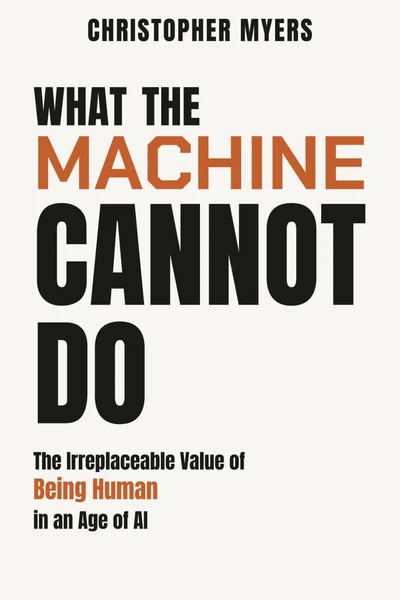
One book for leading AI into your business. One for the human questions that come with it.
Explore the books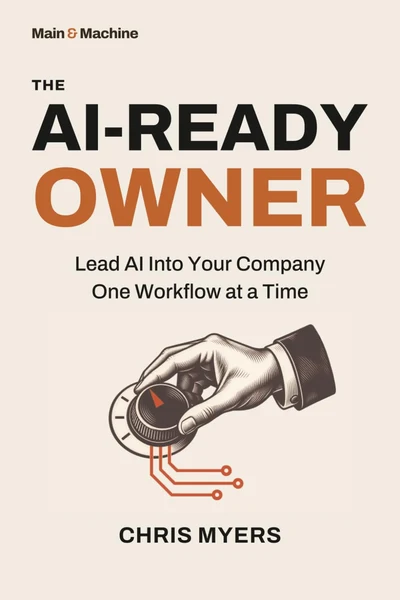
Prefer answers about your business?
Describe one repetitive task. Get a free written recommendation about what to investigate, what may be simpler to fix, and a practical first step. Reviewed by Christopher Myers and emailed within 24 hours.
We reply within 24 hours. A fixed quote follows an agreed scope, before paid work begins.
— Christopher Myers, Founder