Teaching the Machine Your Business
The model arrives knowing the world and ignorant of you, and closing that gap is most of the real work of implementation.
The machine has read more about plumbing than any plumber who has ever lived. It can recite code requirements, explain manifold systems, and draft a service agreement in the style of a firm three times your size.
It does not know that the Hendersons always pay late and are worth it anyway. It does not know your pricing logic, your warranty history, the supplier you quietly stopped using in 2023, or the way your senior tech describes a problem over a crackling phone line. The most knowledgeable system ever built walks into your business knowing everything except your business.
Every useful AI deployment, every one, is a method for closing that gap. There are exactly three methods, the industry has given them confusing names, and an owner who understands the differences in plain English will save real money on every vendor conversation that follows.
The Three Ways In
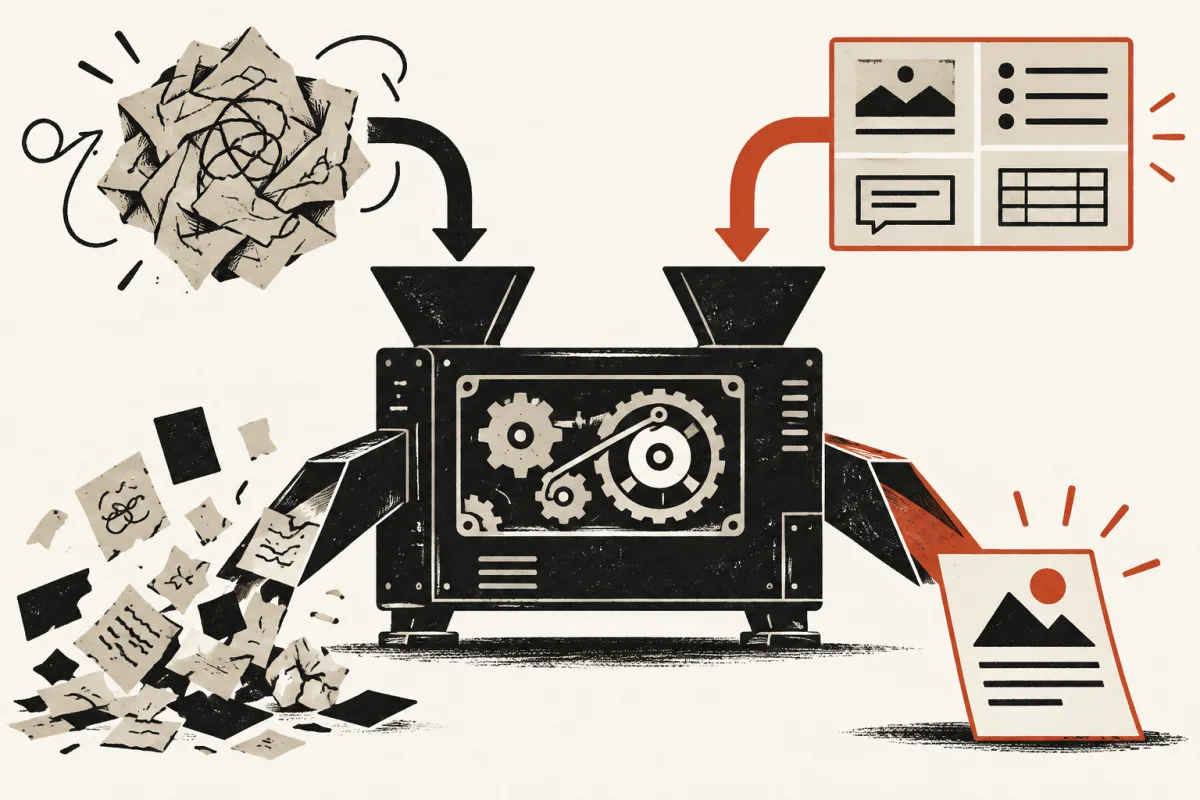
The first method is the simplest: hand the machine what it needs, when it needs it. Paste the contract into the chat. Attach the spreadsheet. This is just the context window from earlier in this series put to work, the desk loaded with the right papers for one task. It costs nothing, requires no project, and for an individual using a chat tool it is the entire game. Its limit is equally plain: somebody has to find and feed the documents, every single time, and the desk is only so large.
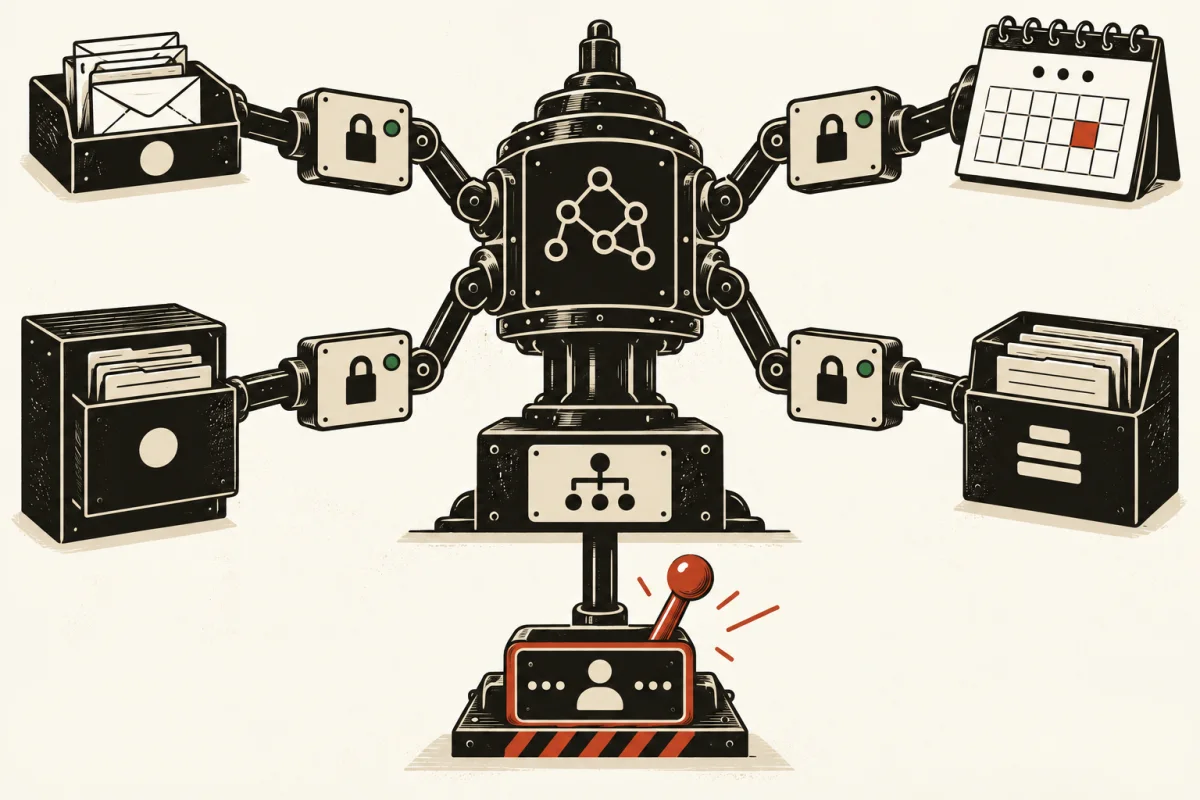
The second method automates the feeding, and it is the workhorse of nearly every serious business deployment. The technique is called retrieval-augmented generation, RAG in the trade, and the plain-English version is this: your documents, policies, past jobs, product specs, and correspondence get indexed into a searchable library. When a question arrives, the system first fetches the most relevant pages from that library, places them on the machine’s desk, and only then asks it to answer, from those pages, with citations back to the source. The model itself never changes. It remains the brilliant generalist; it simply now reads your binder before opening its mouth. Retrieval is why fabrication drops sharply in well-built systems, why answers can say “per the 2024 service agreement, section 4,” and why the machine can know about a job you finished yesterday afternoon.
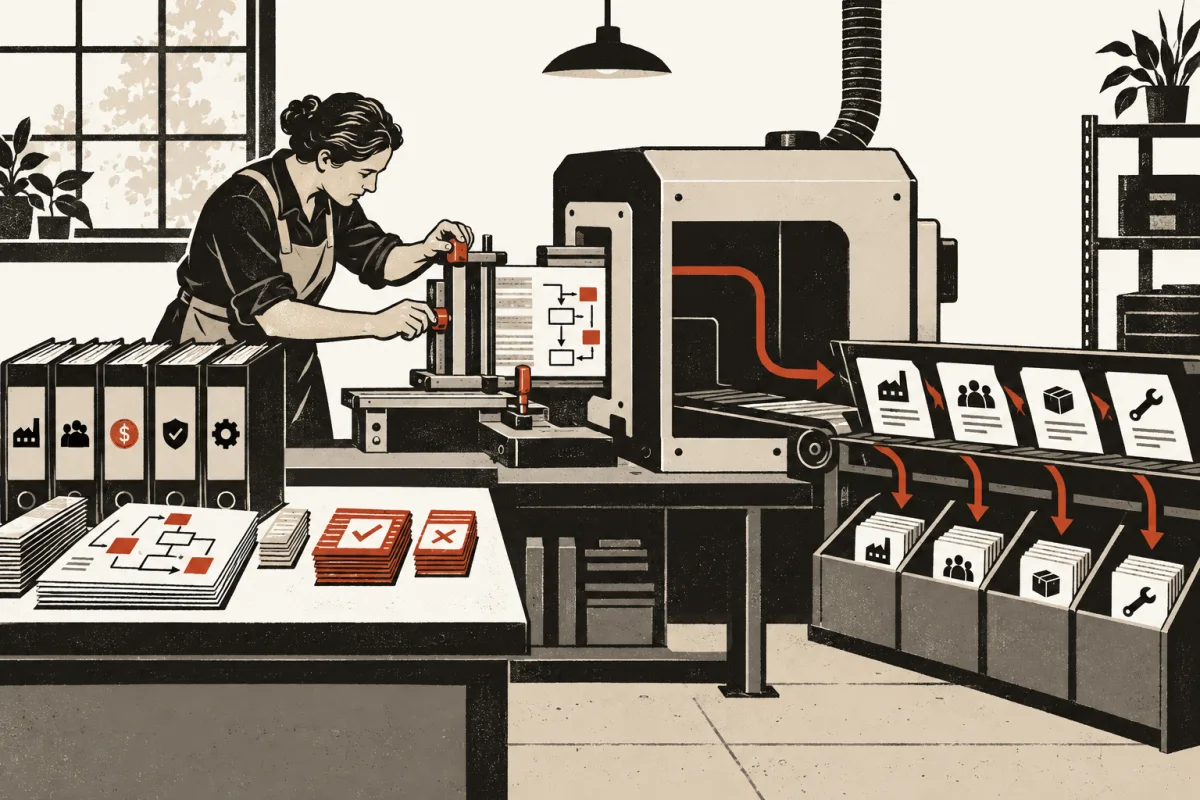
The third method actually changes the machine. Fine-tuning takes a trained model and continues its education on your examples, hundreds or thousands of them, nudging the internal dials described earlier in this series until certain behavior becomes instinct. And here is the counsel that surprises people, coming from someone who builds these systems: most small businesses should skip it. Fine-tuning shines at teaching form, a voice, a format, a classification habit, at very high volume. It is a poor vehicle for facts, because the facts get baked in and go stale the day your price list changes, while a retrieval library updates the moment you drop in the new document. It costs real money, requires maintenance, and solves a problem most firms under a hundred people simply do not have. When a vendor leads the conversation with fine-tuning, ask them why retrieval will not do. The answer is frequently illuminating, occasionally for the vendor.
The New Hire Test
If the taxonomy threatens to blur, run everything through one analogy, because the mapping is nearly exact. You hire a gifted generalist, your new senior coordinator. Pasting context is briefing her on one task at a time, fine for day one, exhausting as a permanent system. Retrieval is giving her organized access to the files, the handbook, and the job history, which is how real onboarding works and why it is the default answer. Fine-tuning is months of repetition until your way of doing things becomes her reflex, valuable eventually, absurd to attempt in week one, and impossible if the files are a mess.
That last clause is the quiet punchline of this whole essay, and the place where I will anticipate your objection. Yes, the sophistication lives in the AI, and no, the AI is rarely where these projects die. They die in the binder. A retrieval system pointed at outdated policies retrieves outdated policies, fluently, with citations. The unglamorous prerequisite for teaching the machine your business is that your business be written down somewhere true: current prices, current procedures, the knowledge presently living only in your operations manager’s head. Owners keep discovering that the AI project was secretly a documentation project, and the discovery is worth its cost, because the documentation outlives any vendor.
At a twelve-person law firm whose workflows we mapped, the breakthrough system was, on paper, mundane: retrieval over their own past matters, briefs, and engagement letters. The associates stopped reinventing documents the firm had already perfected, and the partners’ standards, captured in twenty years of work product, became something a second-year could query at midnight. The machine supplied the reading speed. The firm supplied the firm.
That division of labor is permanent, and it is the right note to end on. Every competitor can rent the same brilliant generalist; the rental market guarantees it. What cannot be rented is a business that knows itself well enough to teach.
Where this shows upHow long implementation takes →