Seventy Years of Overnight Success
The technology that seems to have arrived overnight has been failing, recovering, and quietly compounding since Eisenhower was president.
In the summer of 1956, a small group of researchers gathered at Dartmouth College for a workshop with an audacious premise. They believed that every feature of human intelligence could, in principle, be described precisely enough for a machine to simulate it, and they proposed to make significant progress on the problem in a single summer. The workshop gave the field its name: artificial intelligence.
The summer came and went. The problem did not.
Seventy years later, owners across the country are being told that AI appeared suddenly, that it changes everything, and that they are already behind. The first claim is false, and understanding why it is false changes how you should respond to the second and third.
The Long Prologue
The intellectual groundwork predates even Dartmouth. In 1950, Alan Turing published a paper asking whether machines could think, and proposed his famous test: if a machine could hold a conversation indistinguishable from a person’s, the question of whether it “really” thinks becomes academic. In 1966, an MIT program called ELIZA mimicked a therapist using simple pattern matching, and people poured their hearts out to it anyway. The lesson was uncomfortable then and remains uncomfortable now. Humans are eager to find a mind on the other side of the conversation, whether or not one is there.
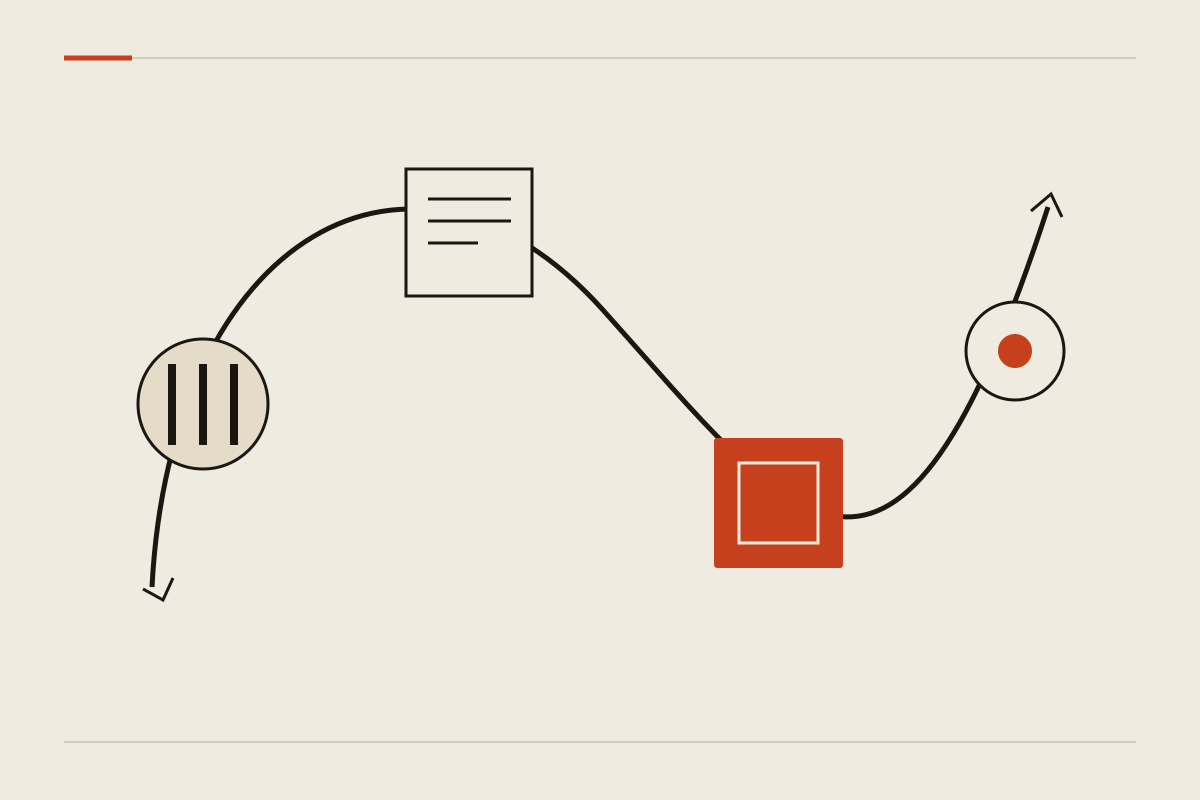
What followed was a cycle the field would repeat twice. Researchers made genuine progress, promised far more than the technology could deliver, and watched funding and attention collapse when the promises came due. The first collapse arrived in the mid-1970s, after a blunt British government report concluded the field had failed to achieve its grand objectives. The second came in the late 1980s, when a boom in so-called expert systems, software that encoded human expertise as thousands of hand-written rules, buckled under its own maintenance costs. Researchers call these periods the AI winters. Careers ended in them. The phrase “artificial intelligence” became so toxic that scientists doing the work rebranded it as “machine learning” just to get grants approved.
The Quiet Decades
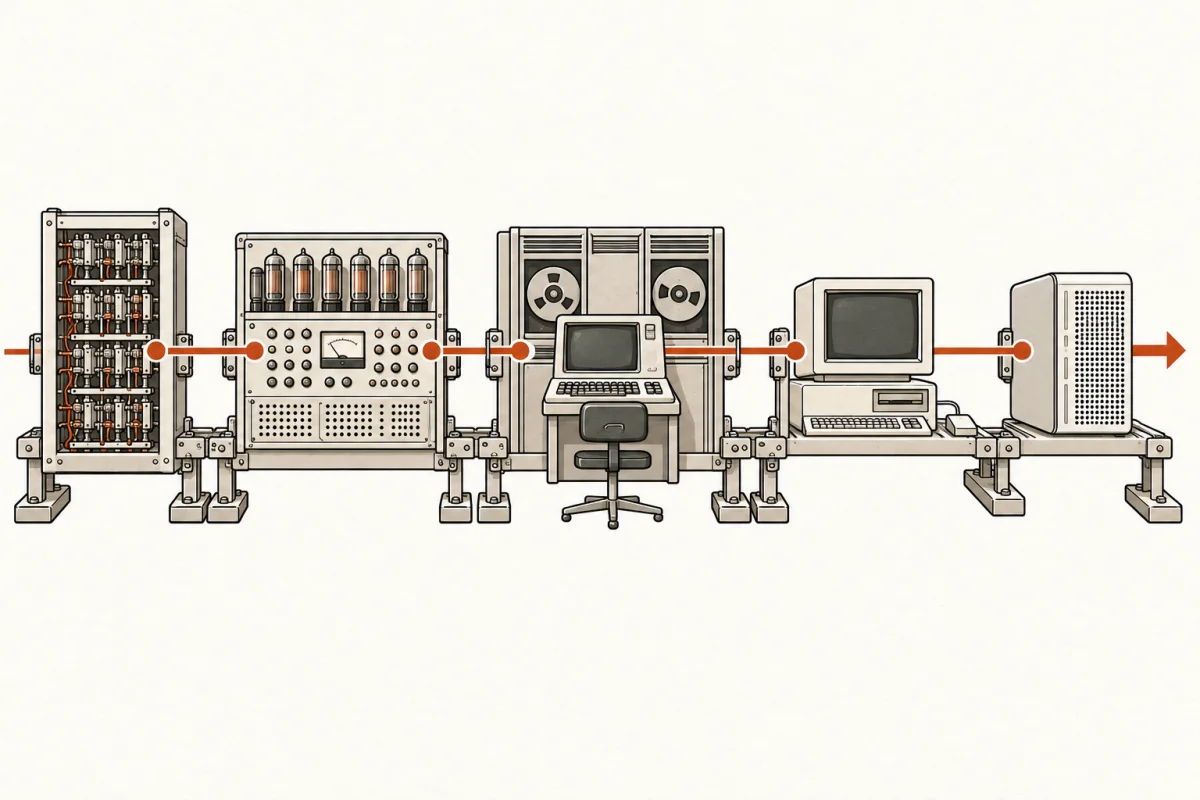
Here is the part the headlines skip. Through both winters and the long thaw that followed, the underlying capability never stopped compounding. While the term was out of fashion, the technology was filtering your spam, approving your credit card swipes, recommending your movies, and routing your packages. In 1997, IBM’s Deep Blue beat the world chess champion. In 2012, a neural network demolished the field in a famous image-recognition competition, and the deep learning era began in earnest. In 2016, a system called AlphaGo beat one of the greatest Go players alive at a game long considered beyond machines.
Each of these milestones was treated as a curiosity by most of the business world. The pattern only became impossible to ignore in November 2022, when a chat interface bolted onto a language model reached an estimated hundred million users in two months. The capability had been building for decades. What changed was that anyone could finally talk to it.
Now, I know what some of you are thinking. If the field has a seventy-year habit of overpromising, why should an owner believe this time is different? It is a fair question, and the honest answer has two parts. The promises are once again running ahead of reality; some of today’s valuations and vendor claims will age as badly as the expert-systems brochures of 1987. And yet the capability underneath the promises is real, deployed, and already doing useful work inside ordinary businesses. Both things are true at once. The winters froze funding and fashion. They never reversed the technology.
What the History Teaches an Owner
I teach entrepreneurship at Arizona State, and when students ask me how to think about AI’s trajectory, I send them to the history before the technology. The pattern of every general-purpose technology, from electricity to the tractor to the spreadsheet, looks the same from inside: a burst of hype, a trough of disappointment, and then a long, quiet period in which the real gains accrue to the people who did the unglamorous work of reorganizing around it. Factories took roughly forty years to capture the gains of electrification, because the gains required rethinking the building, the workflow, and the jobs, and most owners just swapped the steam engine for a motor and called it done.
The history hands you a posture. You do not need to time the headlines, chase the demo of the week, or believe anyone who tells you the world changed last Tuesday. The technology has been arriving for seventy years and will keep arriving for decades more. Your job is the same job it always was: understand your own workflows well enough to know where a new tool genuinely pays, move deliberately when it does, and decline politely when it does not.
The people who panicked in 1987 and the people who scoffed in 1997 made the same mistake from opposite directions. They confused the temperature of the conversation with the trajectory of the capability. The conversation runs hot and cold. The capability has only ever moved one way.
Where this shows upAI for the skeptical owner →