How to Smell the Hype
A field guide to evaluating AI claims, for owners who will hear a thousand of them this year.

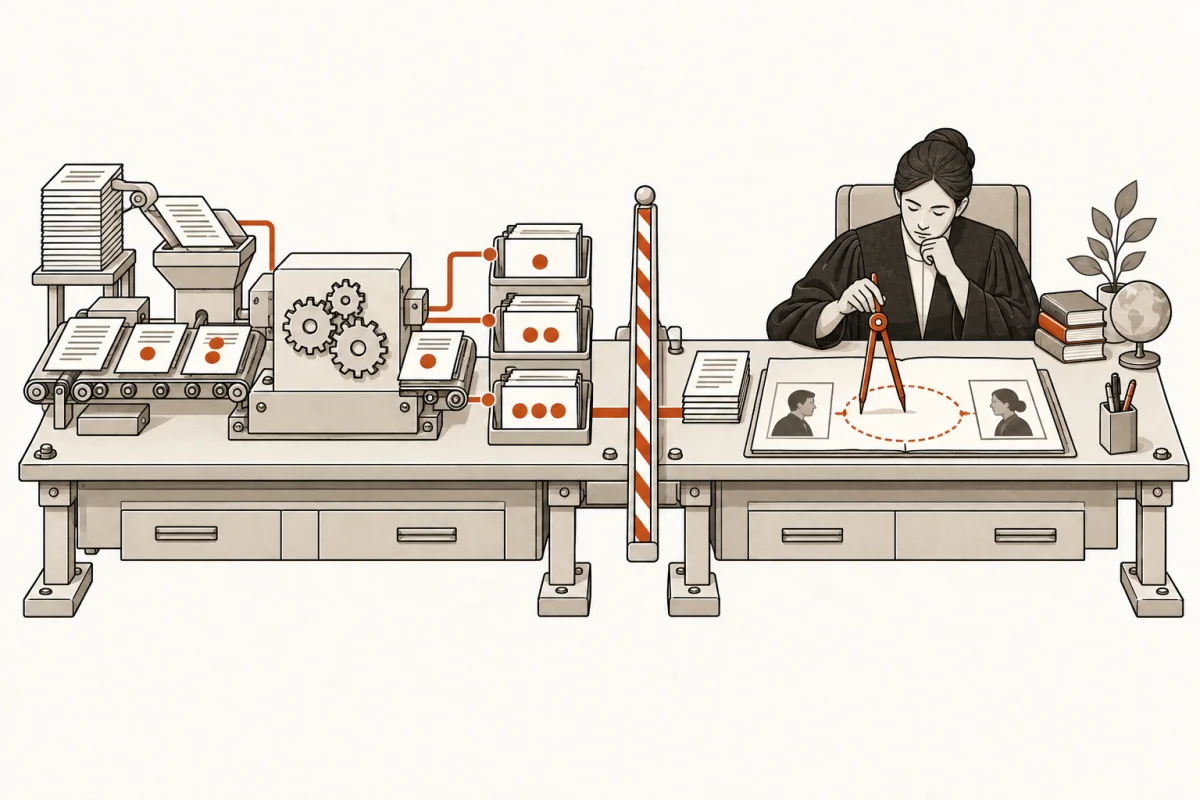
In 1770, a Hungarian inventor unveiled a machine that played chess. The Mechanical Turk toured the courts of Europe for decades, defeating challengers reportedly including Napoleon and Benjamin Franklin, while audiences marveled at the clockwork mind inside the cabinet.
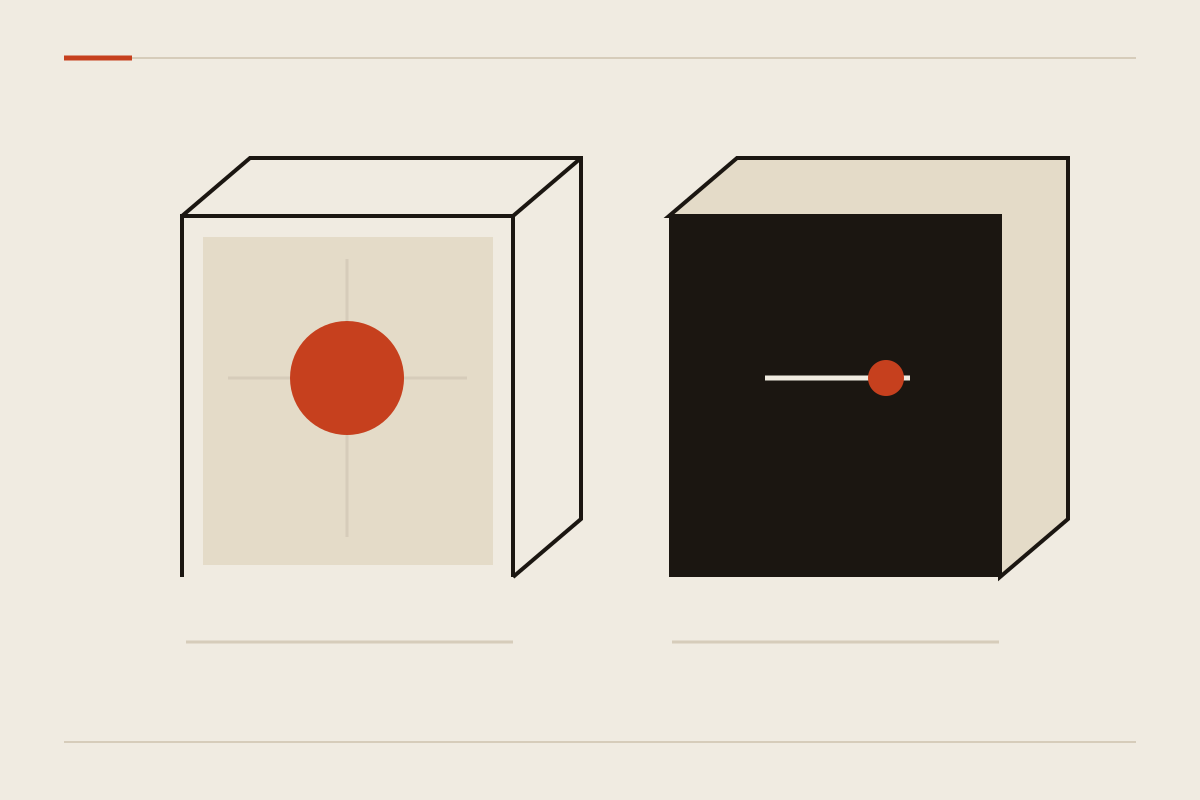
There was a man in the cabinet. A sequence of strong human players, folded behind the false gears, made every move. The machine was real wood, real brass, and a real lie, and it worked for eighty-five years because audiences wanted the clockwork mind to exist, and the inventor knew exactly which doors to open during the inspection.
Two hundred and fifty years later, the technology is finally real, as this series has spent fourteen essays establishing. And that, paradoxically, is why the cabinet trick is having its best decade ever. Genuine capability provides the cover under which exaggeration travels. Your inbox, your trade shows, and your software renewals are now full of claims, some describing real machines and some describing cabinets, and the price of confusing them comes straight out of margin.
The Modern Cabinets
The tricks have modernized; the anatomy has not. Learn five of them and you have seen most of what is coming.
The demo is the oldest. A demonstration is a performance: rehearsed inputs, curated outputs, the Turk's doors opened in the flattering order. The distance between a demo and a deployment, working daily, inside a messy real business, on inputs nobody curated, is the distance that the 78 percent of disappointed AI spenders discovered after signing.
The label is the cheapest. As an earlier essay in this series detailed, "AI-powered" now decorates plenty of ordinary software, sometimes a thin wrapper over a model anyone can rent, sometimes a rules engine in a new costume, priced as if it thinks.
The guarantee is the tell. Real results from this technology depend on your data, your workflows, and your follow-through, which is why honest practitioners quote ranges and conditions. A vendor guaranteeing a specific return has either never deployed or stopped caring what happens after the signature. The same applies in reverse to the doom-sellers guaranteeing your obsolescence by Christmas; fear is also a funnel.
The benchmark is the sophisticated trick. Scores on standardized tests make impressive slides, and the man in that cabinet is the gap between test conditions and your Tuesday. A model acing a bar exam tells you something real about the technology and almost nothing about whether this product handles your intake.
And the pilot is the trick businesses play on themselves: the eternal proof of concept, impressive in the lab, never quite reaching the workflow, consuming budget while providing the comfortable feeling of progress. A pilot without a deadline and a production criterion is a subscription to that feeling.
The Inspection
Here is the protocol, the questions that find the man in the cabinet, and notice that none of them requires you to understand a single technical term from this series, though every essay sharpened them.
Show me the system running on work like mine, live, on inputs I supply. Real systems survive uncurated Tuesdays; cabinets need their own chessboard.
What happens when it is wrong, and who finds out, and how fast? Every real deployment has a crisp answer, because every real deployment has been wrong. Hesitation here is a verdict.
What does it cost at my volume, all-in, including the integration, the training, and the year-two price? Cabinets are cheap to enter and expensive to occupy.
What do I own if we part ways? Your data, your prompts, your workflows, exportable, in writing. The answer reveals whether they planned to earn your renewal or fence you in.
Give me a reference customer my size, in production for over a year. The man in the cabinet has no year-old references, only fresh marvels.
What is this bad at? The honest vendors answer instantly and specifically, because they have watched their system fail and respected the audience enough to say so. This question has saved my clients more money than the other five combined.
The Verdict That Matters
I will close the question this series opened fifteen essays ago, because you have earned the plain version. The technology is real. The seventy-year history is real, the prediction engine is real, the buildings are real, the working agents inside ordinary businesses are real, and so is the repricing of work now underway. And the noise is also real, layered over all of it, because every genuine gold rush mints more shovel salesmen than miners.
Your protection was never going to be a better filter for the claims. It is what these essays were quietly building the whole time: a working model of the machine itself, what it does, what it costs, where it fails, what it can never replace, so that no claim, breathless or dire, reaches you without something solid to bounce off. The Turk fooled Europe for eighty-five years because the audience inspected the cabinet without a theory of what could be inside it. You now have the theory.
The machine is the tireless part. The judgment about what to believe, what to buy, and what to build was always the human part, and you just finished sharpening it. Durable things get built by people who can tell the difference. Go build one.
Where this shows upScope a project a vendor can't inflate →