The Prediction Engine
A large language model is a machine for guessing the next word, and that turns out to be enough to change how work gets done.
A student stayed after class last semester to ask me a question that sounded simple. Does ChatGPT actually know things?
I gave her the honest answer, which is strange enough that it is worth a full essay. The machine predicts. Everything else, the apparent knowledge, the fluent paragraphs, the working code, the passable legal summary, emerges from prediction done at a scale that is genuinely hard to hold in your head.
If you run a business and you are going to make decisions about this technology, this is the single most useful piece of mental furniture you can install. Once you understand what the machine is actually doing, its strengths stop seeming magical and its failures stop seeming mysterious.
The Game Behind the Curtain
In the late 1940s, Claude Shannon, the engineer who founded information theory, ran a deceptively simple experiment. He had people guess a text one letter at a time, revealing each answer as they went, and measured how predictable English actually is. The answer: very. Language is soaked in pattern. Given “the check is in the,” you know the next word, and so does everyone else.
A large language model is that parlor game, industrialized. During training, the system reads an enormous portion of the written internet, along with books, articles, and code, and plays the same game trillions of times: here is a passage, predict what comes next. Every time it guesses wrong, its internal settings get nudged so the right answer becomes slightly more likely next time. Those internal settings are called parameters, and modern models have hundreds of billions of them. That is the “large” in large language model. The “language model” part just means a statistical map of how words follow words.
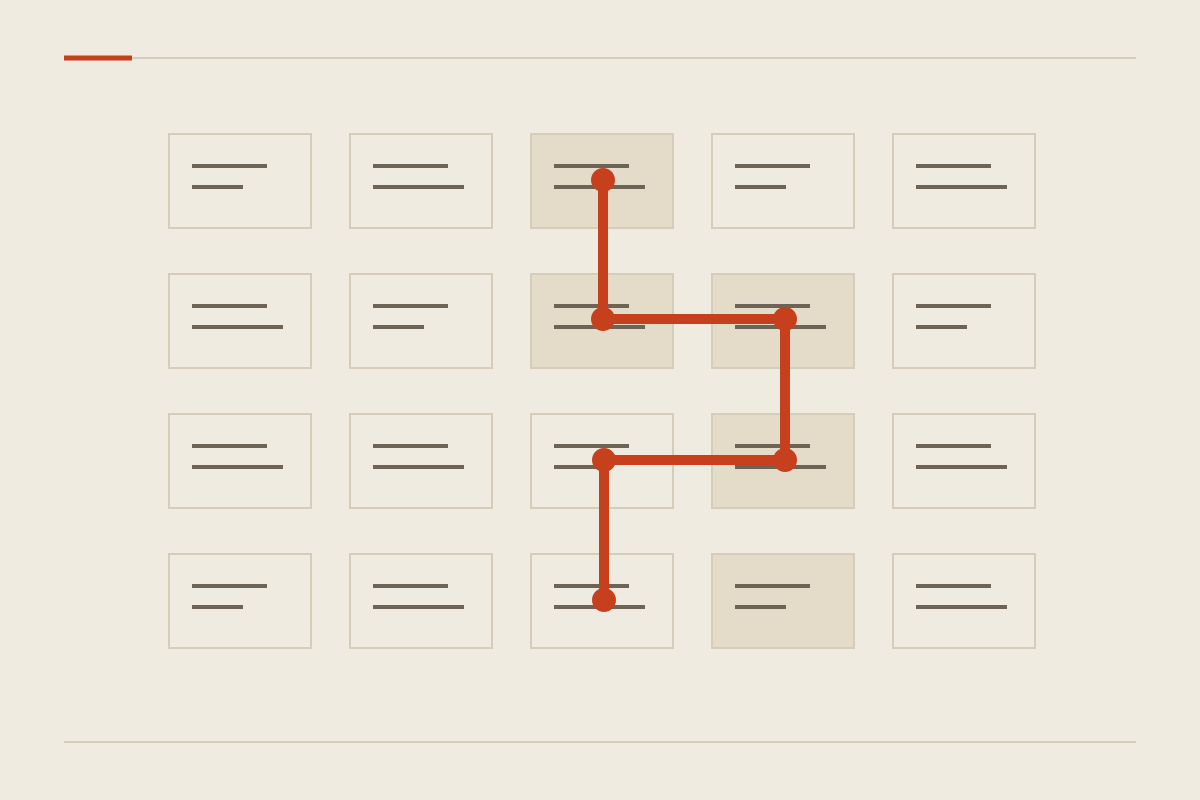
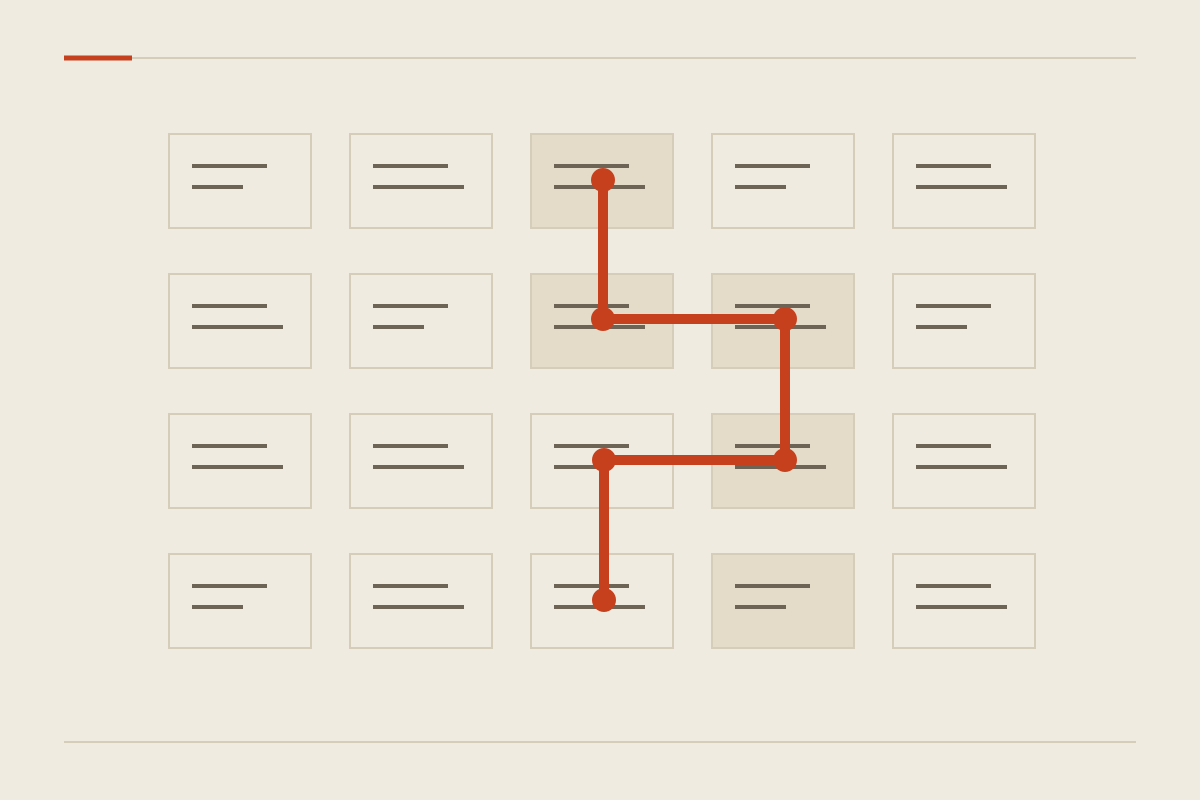
When you type a question, the model is doing one thing: producing the most plausible continuation of the text in front of it, one small chunk at a time. There is no database lookup, no filing cabinet of facts, no little researcher inside. There is a map of patterns so detailed that traversing it produces sentences which are usually true, usually relevant, and always confident.
Why Prediction Looks Like Thinking
Now, I know what some of you are thinking. If it is only autocomplete, why can it summarize a contract, draft a customer email in my voice, or explain a regulation in plain English? Fancy autocomplete should produce mush.
The answer is the most important idea in this entire field: to predict the next word well enough, across the entire breadth of human writing, the system is forced to internalize the structures that produced the writing. You cannot reliably complete a sentence about plumbing codes without absorbing something about plumbing codes. You cannot continue a logical argument without absorbing the shape of logic. Grammar, facts, styles of reasoning, the rhythm of a good apology letter: all of it gets compressed into the map, because all of it improves the guess. Capability rides in on the back of prediction. Researchers were as surprised by this as anyone.
The same explanation covers the failures. A system optimized for plausibility will produce a plausible answer regardless of whether a true one is available. Ask it for a court case supporting your position and it may supply one that has never existed, formatted perfectly, because perfect formatting is what the pattern demands. The confidence is constant; the grounding is variable. That trait has a name, hallucination, and it gets its own essay later in this series.
What This Means at Ground Level
In our implementation work I watch owners meet this technology for the first time, and the ones who thrive share a mental model. They treat the machine as a brilliant, tireless, occasionally careless drafter. It has read more about their industry than anyone they could ever hire. It has never met their customers, does not know what happened in yesterday’s meeting, and feels no embarrassment when it is wrong.
That framing tells you exactly where it pays. First drafts of anything: emails, proposals, job descriptions, summaries of long documents, translations between formats, between tones, between levels of expertise. Transformation of text is the home turf, because transformation is prediction with the answer key attached. And the framing tells you where the guardrail goes. The machine produces; a person remains accountable for what goes out the door. The fluency is the machine’s. The judgment, and the signature underneath the work, stay yours.
My student deserved a direct answer, so here is the one I gave her. The machine does not know things the way you know your mother’s voice. It predicts things, from the largest map of human expression ever assembled, and the map is now good enough to do real work. Use it for what it is and it will serve you well. Mistake it for what it resembles and it will eventually embarrass you.
The difference between those two outcomes is understanding, and now you have it.
Where this shows upWhat we actually build →